
Don't Buy Just a Powered Anode, Buy an Engineered System.
Water Tank Tec combines a titanium MMO-coated Anode with purpose-engineered controller electronics and monitored anode voltage/current to deliver an engineered approach to water-heater odor and internal tank corrosion protection.
$94.95 • Free 1–3 Day U.S. Shipping • Lifetime Warranty on the Controller and Anode.
All Orders Received By 5:00 AM ET Time Zone Ship Same Day Monday – Saturday. Our System Ships from Muncie, Indiana.
All emails Answered Within 24 Hours Or Less.


Our Systems Key Benefits.
💧 Helps Eliminate Sulfur Odor
Helps reduce the hot-water sulfur odor commonly associated with conventional aluminum and magnesium sacrificial anodes.
🛡️ Advanced Tank Protection
Delivers a safe DC electrical current to the titanium anode to help protect the carbon-steel interior of the water-heater tank from corrosion.
♾️ Long-Term Performance
Designed for continuous, long-term operation without the regular sacrificial-anode replacement required by conventional systems.
🔧 Designed for Easy Installation
Fits into the existing anode location on many residential water heaters for a straightforward installation.
⚙️ Engineered for Water Heaters
Purpose-built and engineered specifically for residential water-heater applications and their unique operating environment.

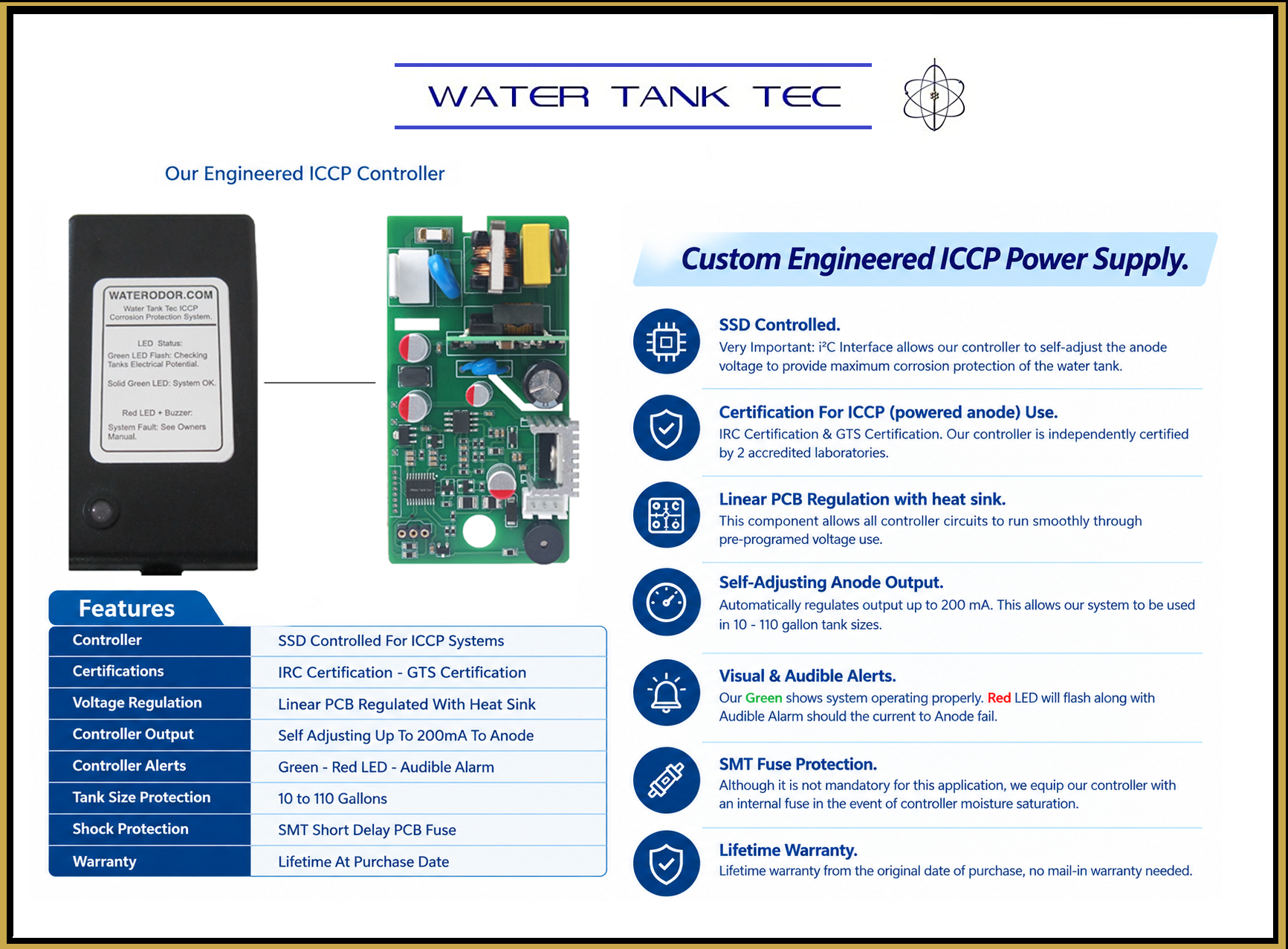
Water Tank Tec Engineered Electronics.
Water Tank Tec's controller is developed specifically for Powered Anode applications using our proprietary controller developed by us as shown below.
Why Controller Engineering Matters.
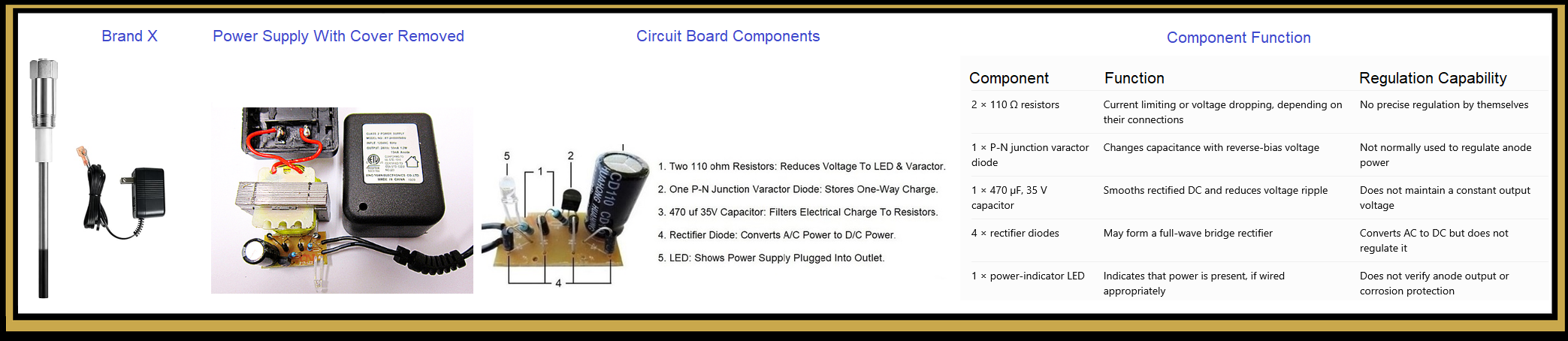
AC/DC wall adapter transformers commonly power small or portable electronic devices such as phones, laptops, computers, CCD cameras, LED lighting system and home appliances by converting high-voltage AC from the wall outlet into low-voltage DC.
Our testing found these devises were not suitable to use in our system which is why we do not use them.
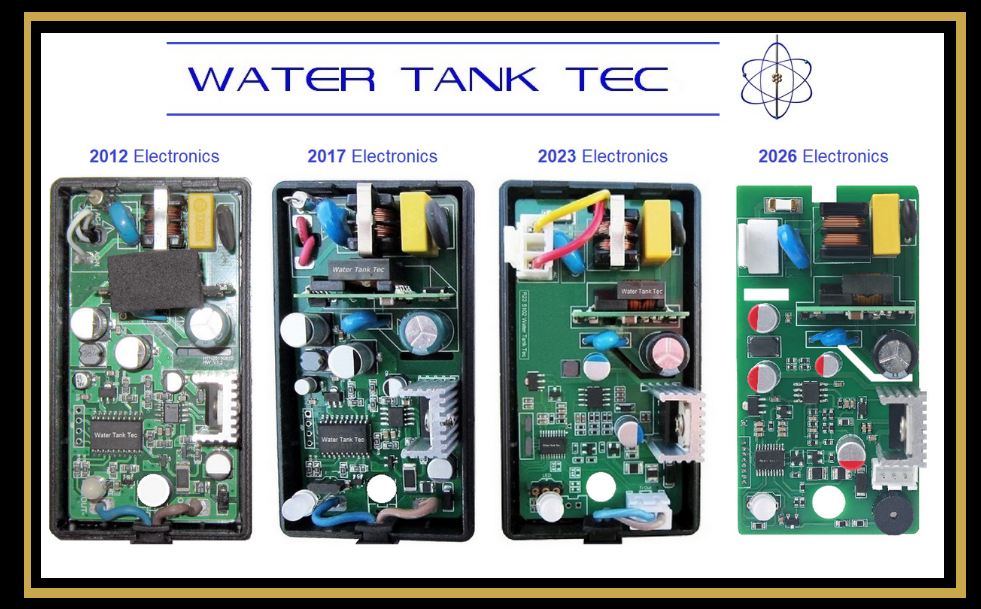
At Water Tank Tec, we continually upgrade our electronics as newer components become available to deliver optimized ICCP corrosion protection for residential hot water tanks, while many competing brands continue to rely on decades-old technology that was never specifically engineered for this application.
When you purchase our system, you will receive the most advanced electronically Powered Anode sold on the market.
Sacrificial Aluminum Anodes vs. Powered Anodes.
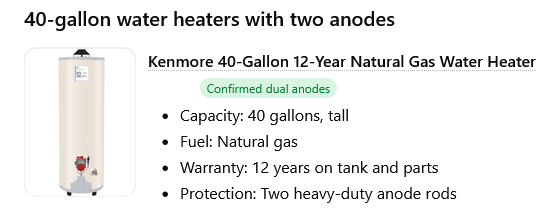
Aluminum anodes are sacrificial components designed to gradually dissolve as they protect against corrosion. For this reason, they are manufactured with additional thickness and length to provide extended service life. Extended Water Tank Warranties in some cases mean the manufacture includes 2 Anodes as seen below. A 6-year warranty would have only 1 Anode.
Powered Anodes, on the other hand, are typically made from titanium and are designed for long-term use without being consumed in the same way as sacrificial anodes. Rather than dissolving over time, they operate using an external power supply that delivers the electrical current needed for corrosion protection. The titanium acts as a durable electrode, while the system’s power supply provides the electrons necessary for protection.
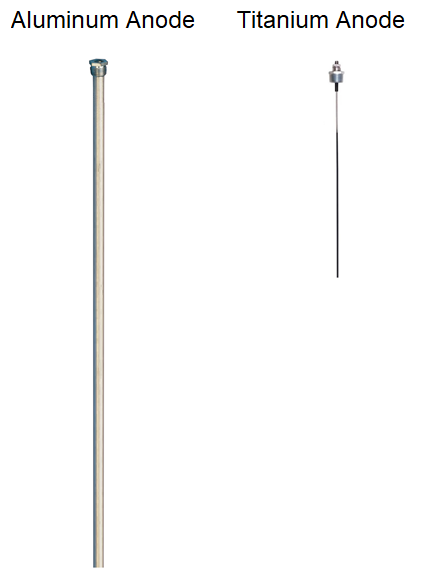

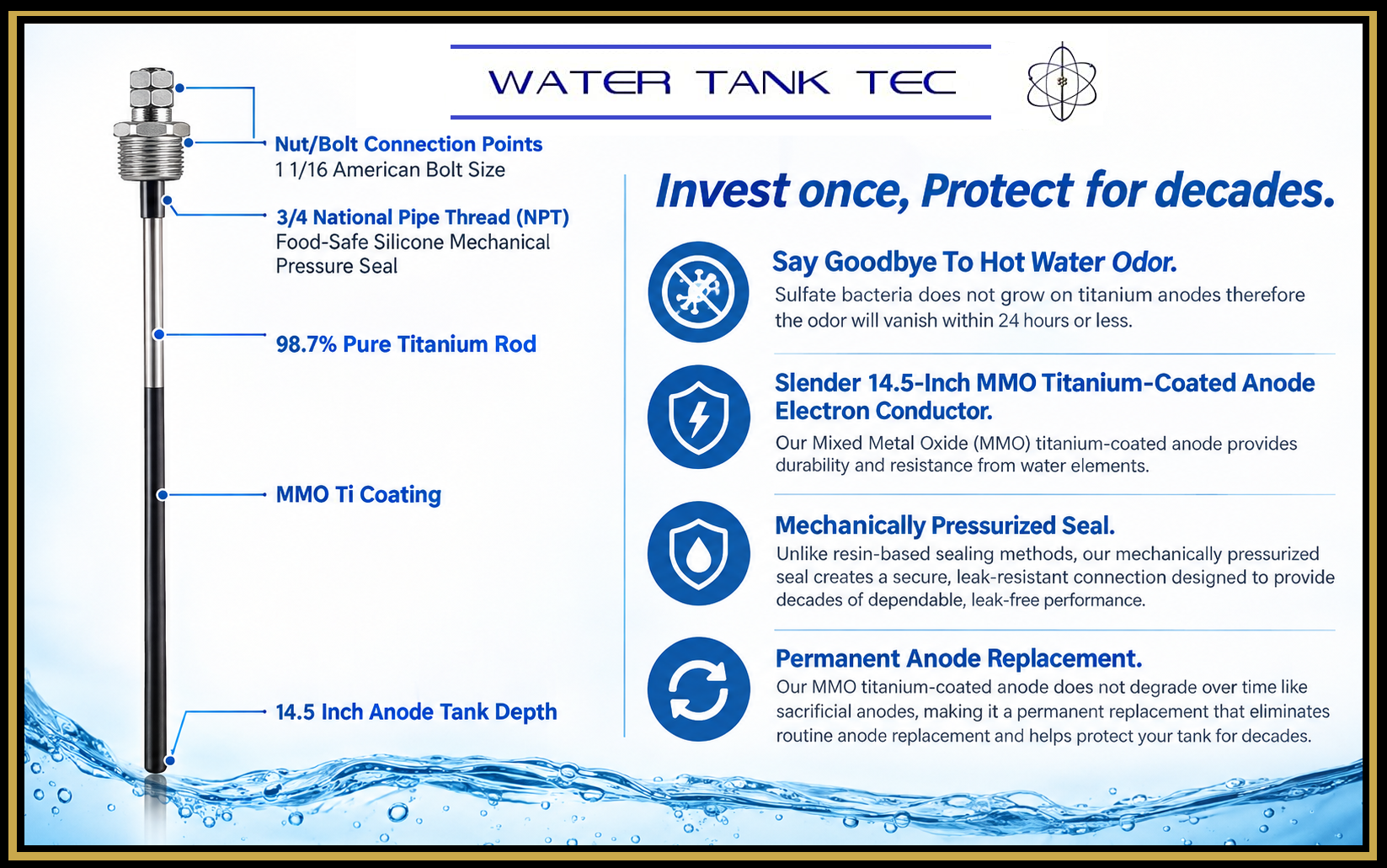
Although slender in design, the Water Tank Tec titanium Powered Anode is engineered to deliver effective electronic corrosion protection. While larger anodes may appear more impressive, our design is guided by science and performance—not size or appearance.
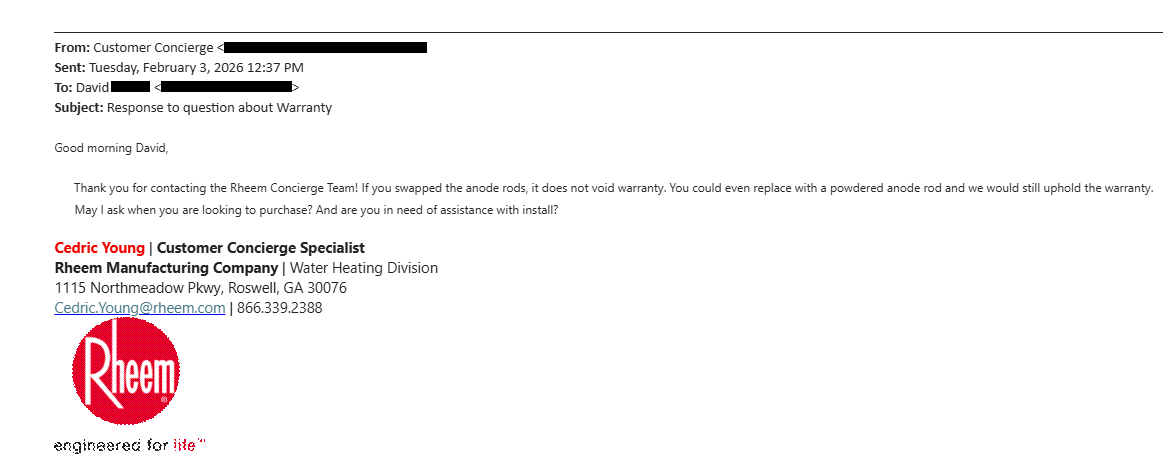
Will Installing a Powered Anode Void My Water Heater Warranty?
It's a reasonable question — and one you should ask before modifying your water heater.
Water Tank Tec has received manufacturer correspondence concerning the installation of our Powered-Anode system (see below). We provide this documentation so customers can review the information for themselves.
Important: Water-heater warranties vary by manufacturer, model, installation conditions and warranty terms. Always review the warranty documentation for your specific water heater before installation.
Will It Fit My Water Tank?
Our system works in the following brands: AO Smith - Bradford White - Rheem - State - Reliance - Whirlpool - American - Lochinvar. If your brand is not listed, please contact us for confirmation.
Why Does My Hot Water Smell Like Rotten Eggs?
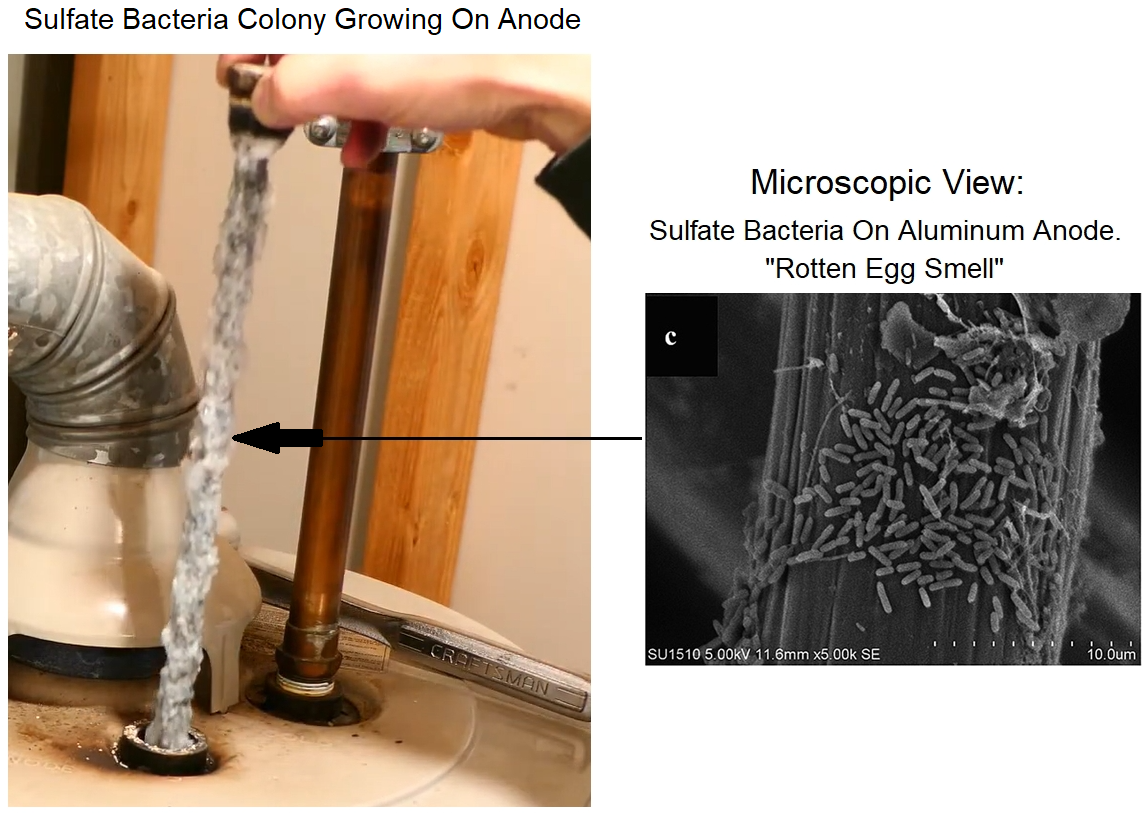
The familiar sulfur, or “rotten egg,” odor in some water heaters can result from an interaction between water chemistry, naturally occurring microorganisms, and the conventional sacrificial anode. Under certain conditions, microorganisms can colonize the anode, contributing to unpleasant odors. The affected anode may have a noticeable sulfur odor and a slimy or coated appearance when removed.
This issue is especially common with well water or other non-chlorinated water supplies. Conventional aluminum anodes are designed to be consumed as they protect the tank, water conditions can cause the anode to contribute significantly to sulfur odor formation.
1st Step: Removing The Sacrificial Anode Odor Source.
Removing the Aluminum Anode, which contributes greatly to the odor issue, is the first step.
Installation Video Of Our Product.
How Our System Electronics Work And Alerts Consumers.
Powered Anode Engineering Questions.
Powered-anode advertising can contain many different claims. We believe consumers should examine those claims carefully. We have listed the most common claims below.

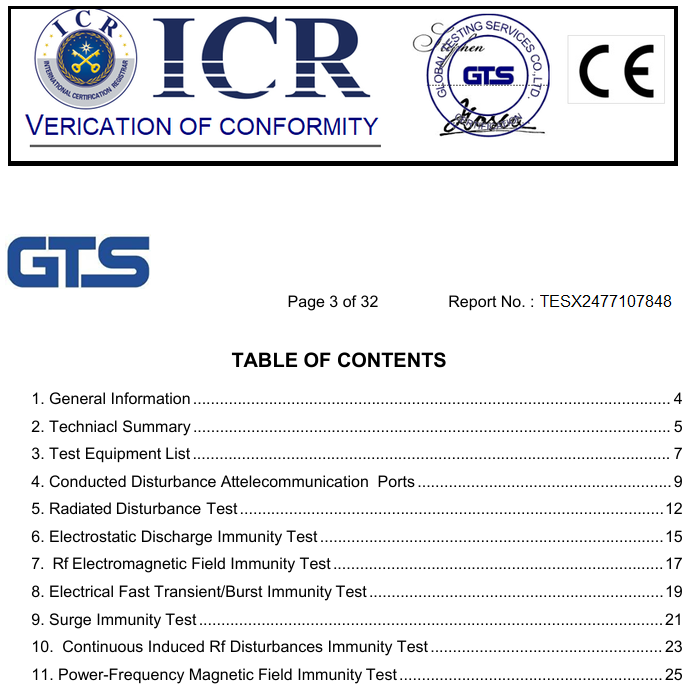
Has The Water Tank Tec Controller Been Tested By Independent Laboratories for Powered Anode Use?
Yes. Water Tank Tec’s has been independently tested and evaluated by a third-party laboratory specifically for this application. This provides added confidence to the consumer in our controller’s suitability to support long-term internal corrosion protection of the tank. We do not use generic transformer power supplies that are not suited for this application.
Engineering Questions.
Does The Water Tank Tec Anode Need Replaced Over Time?
No. Our powered is made from titanium which does not interact with water therefore is a permanent replacement.
Will A Powered Anode Eliminate My Sulfur Odor?
It will in most cases, when the odor is associated with the conventional sacrificial anode. Tank temperature settings are also a cause. Tank temperatures setting of 120 degrees may work with your water. If not, we recommend increasing the temperature by 5 degrees over night until the odor is gone however never exceed 130 degrees for scolding may occur. See Our Chart Here.
Will A Powered Anode Prevent Limescale?
No. Limescale is an ion and is a water-hardness and water-quality issues. A powered-anode is not a substitute for a water softener or other water-treatment equipment.
Will It Reduce The Need To Flush My Water Heater?
No. Regular flushing and maintenance should continue according to the water-heater manufacturer's recommendations.
Will It Reduce Water Hardness?
No. Water hardness requires appropriate water-treatment equipment such as a water softener.
Will A Larger Tube, Mesh Or V Shaped Anode Rod Protect My Tank Better?
No. ICCP anodes are impressed-current emission electrodes, not sacrificial anodes. Their job is to discharge current into the tanks water. They are not consumed over time. therefore, their physical size can be much smaller and slender.
*Editor’s note: The Anode must be matched to the tanks size and the controllers monitoring capability.
Will A Powered Anode Stop Water Heater Pop, Crack, or Cloudy Water?
No. When an electric water heater has not been flushed for years, sediment and limescale can build up around the lower heating element. When the element turns on, water trapped beneath the buildup can become extremely hot, causing the familiar popping and cracking sounds. As the buildup is disturbed, it can also contribute to cloudy or hazy hot water when you turn on the faucet.
Regular flushing and proper maintenance can help reduce sediment buildup, improve heater performance, and extend the life of the heating elements.
Understanding Powered Anode Brand Differences.
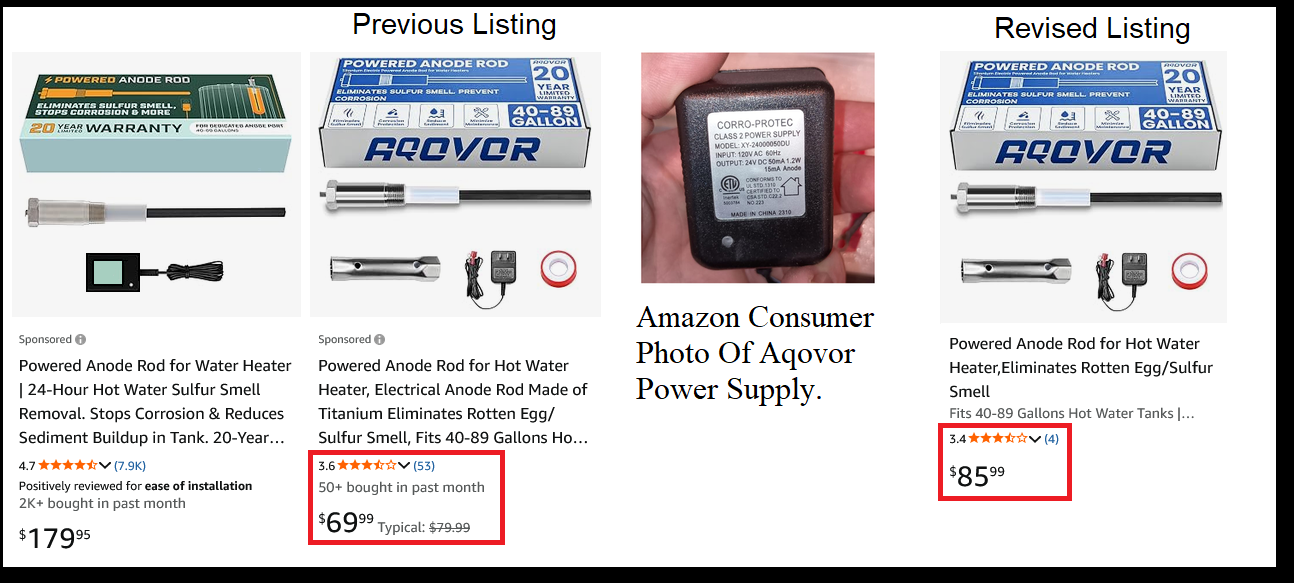
Some Powered Anode products are sold under different brand names and may use components that appear similar or identical to other brands.
We identified an AQOVOR product advertised at $69.99 that appeared to use a power-supply component also found in another branded product. The previous listing: 53 reviews, 3.6-star rating have been removed. The new listing: shows 4 3.4 5-star reviews and priced at $85.99.
This observation does not, by itself, establish that the products are identical or that they will perform identically or they are from the same seller. We are only posting public consumer reviews and photos.
How Water Tank Tec Takes Care Of Our Customers.
The image below illustrates our commitment to standing behind our product to a consumer who purchased our product 5 years ago.

V-Shaped Anodes: Construction and Sealing.
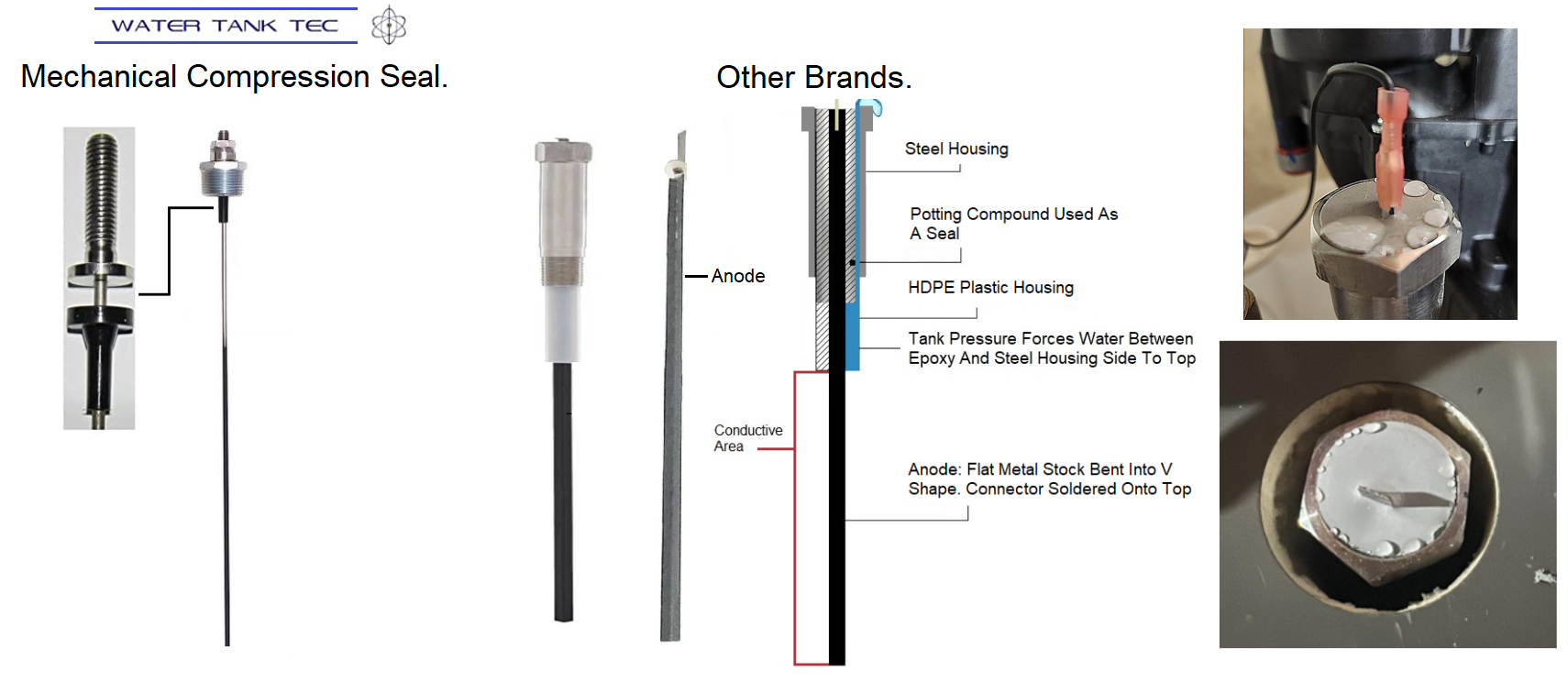
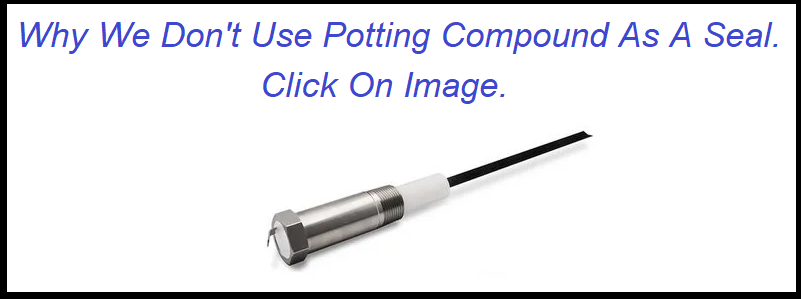
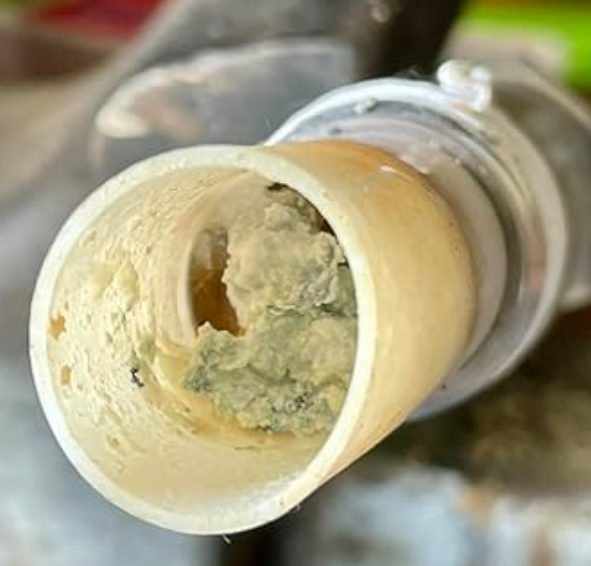
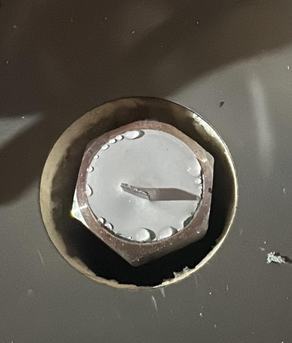
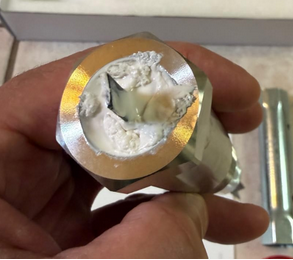
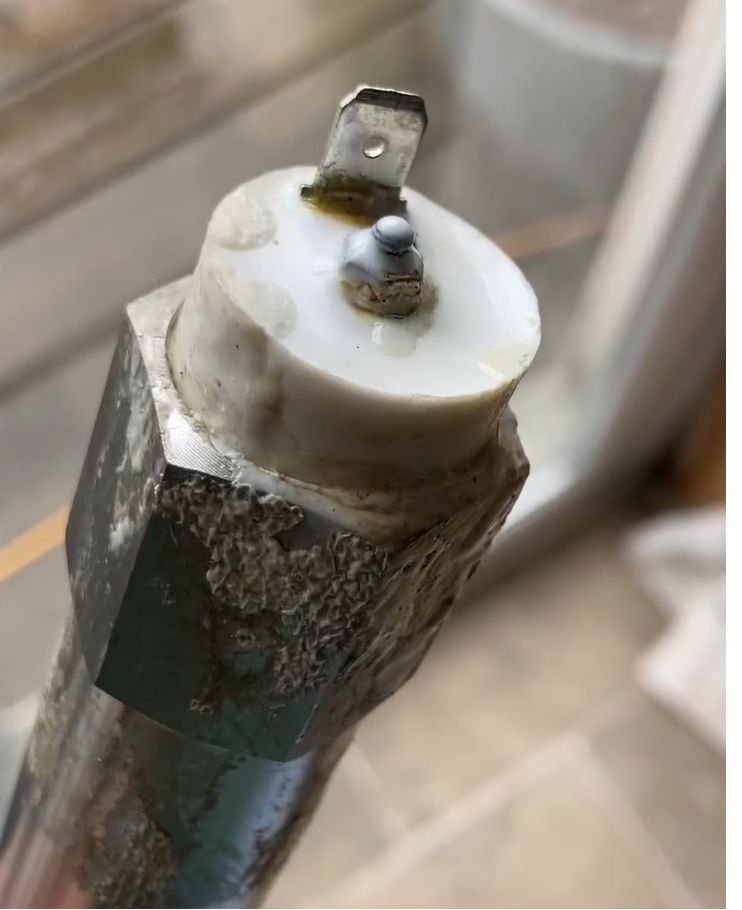
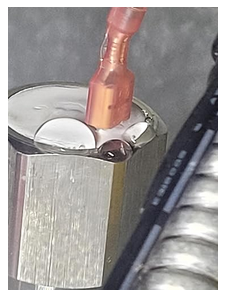
Powered-anode systems use different methods of constructing and sealing. One approach uses a molded or potted material as part of the sealing system. If leaks do occur, and left un-checked, the tanks insulation will become saturated with water.
Water Tank Tec uses an industry-standard rubber O-ring as part of its tank connection and sealing design. The O-ring provides a mechanically compressed seal between the appropriate mating surfaces to ensure proper reliable sealing.
Documented Examples of Leaks and Seal Failures.
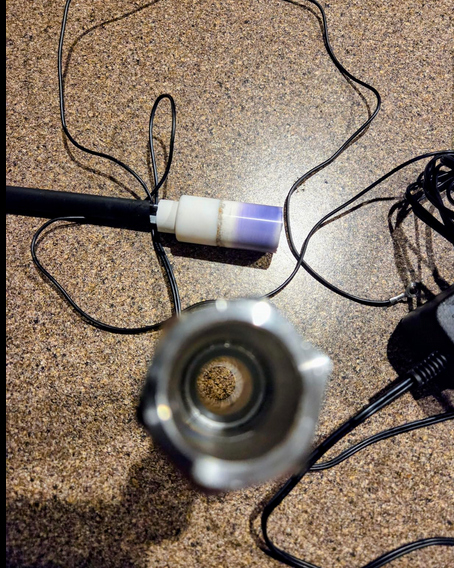
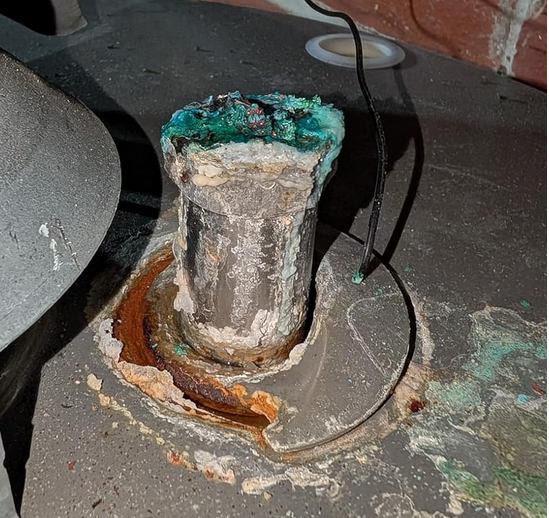
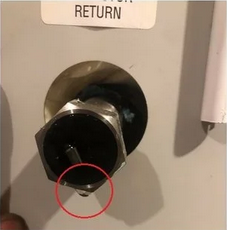
The photographs below show individual examples of leaking, separation, or other failures that were reported to us or otherwise documented in connection with particular epoxy-sealed powered-anode products.
These photographs are provided for informational and comparative purposes only. They are not intended to establish the failure rate, reliability, or performance of every epoxy-sealed powered-anode product, manufacturer, or design. Individual products may differ substantially in construction and performance.
Disclaimer.
This page contains technical comparisons and information concerning powered-anode and impressed-current cathodic-protection systems. References to other products, manufacturers, brands, photographs, screenshots, specifications, or advertising claims are provided for purposes of product comparison and consumer information.
Images and quoted or reproduced claims originating from other manufacturers or sellers are presented as obtained from their publicly available materials and are not intended to imply sponsorship, endorsement, affiliation, or approval by those manufacturers.
We do not claim that every product represented by a particular design, brand, sealing method, or power-supply type will perform identically.
Where Is The Anode Located?
All American water heaters have an anode rod that can be removed. Bradford White, however, uses a ‘nipple’ anode meaning it does not have a port rather it is on the Hot water side of the tank. This replacement is shown on this site further down on the page. Once the Anode Port is found, remove the plastic cover, and foam insulation. Once the Anode is located, use a 1-1/16 inch 6 point socket to extract the previous anode. With the same socket, screw our anode in the same location.

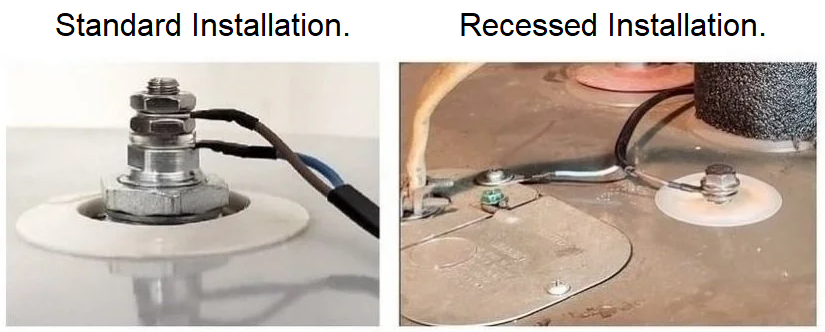
Water Tank Tec Standard vs Recessed Installation.
Below are 2 alternatives for installation. If the anode port is recessed (higher efficiency tanks) we provide a free extension rod that screws onto our anode allowing for wire connection points.
Click here for our PDF installation Instructions.
My Anode Wont Break Loose Or Bradford White Installation.
Some factory anodes can be tough to remove. If you strip the bolt off or simply cant break it loose, you can purchase the below parts for less than $10.00 and install it on the Hot water side of the tank as shown below. This installation will also work with the Bradford White tanks installed on the HOT water side. Keep in mind, always flush the water tank before or after installing our product. This will remove any debris of of the old Anode and any limescale accumulation.
Correct Installation of Bradford White Or Alternative Anode Location.

Bradford White (nipple anodes) Installation.
How To Remove Your Nipple Style Anode Rod Click here for a short video
Bradford White and some A O Smith tanks use a nipple type Anode rod. If you can’t find your anode port on top of the heater then you more than likely have a nipple style rod. These replacement Anodes cannot be purchased at Lowe’s or Menard's. These Anode Rods must be purchased on-line.
If your water heater has a single nipple style Anode Rod, please see the below diagram to convert your tank and incorporate our system. We do not sell these parts since by the time you add in USPS shipping costs, it would amount to $35.00 to send you $15.00 worth of parts.
Nipple Style Anode Rod Conversion Hardware.
Finding Your Anode Rod Location - Removing & Extracting. Click On Images For Helpful Notes.


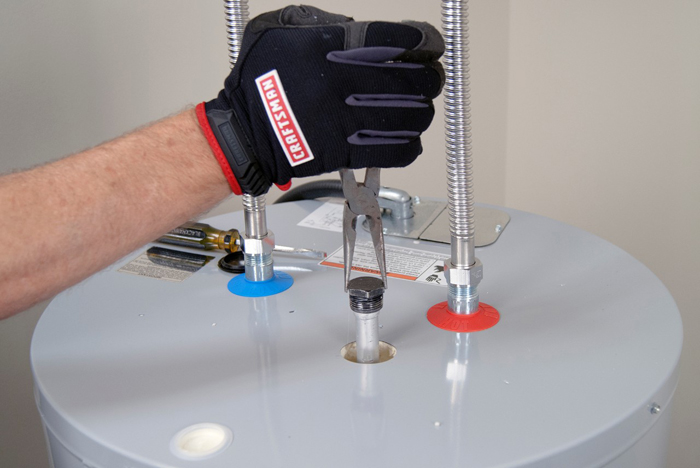
Location Of The Anode Rod Before Ordering Our Product Or Purchasing A New Tank.
If you can find the location of your Anode Rod Bolt Top on your existing heater tank, our system can be installed (see above photos). It is advised that if you are purchasing a new water heater that you find the Anode Rod location on their display model. If you can't find the Anode port, ask to see the owners manual. If it is accessible and between 10 to 110 gallons, our product will work in your system. Removing the Factory Anode Rod will require a breaker bar and someone else to steady the tank when removing it.
Helpful Tip On Removing The Factory Anode Rod.
Instead of using thread tape or liquid sealant, some factories install the Anode Rod using Red Loctite which is a permanent liquid thread sealant and is difficult to remove. Use only a 6 point 1 1/16 socket. Leave the tank full of water or if a new installation, fill the tank full first. The water will help steady the tank. Best results are using a 1/2" breaker bar with a pipe extension. If you have access to an impact wrench, this would be even better. See our customer photos above for removing the foam insulation.
Our Warranty.
We offer a lifetime warranty on our Potential Controller and Anode. If the LED ever flashes Red, contact us via email: mray@waterodor.com If we cannot resolve the issue together, a new controller will be sent to you free of charge.
Shipping & Delivery Times. All Below Times Are Indiana Eastern Daylight Savings Time (EDT).
* All Orders Are Shipped USPS Ground Advantage. You Can Expect 1 to 3 Day Delivery times Anywhere In The USA.
* Shipping: All orders received by 5:00 AM Daylight savings time (DST) Monday - Friday ship the same day.
* Saturday Orders By 5:00 AM Ship Same Day.
What You Will Receive.
1 MMO Ti Coated Tank Sensor Rod.
1 Power Supply Control Module With 8' Power Cord.
1 Stainless Steel Extension Rod ‘If Needed’ For Recessed Anodes (insulation depth thickness).
Simple Installation Instructions.
Returns.
Non-Installation Returns After Purchase: 3 Months. If the anode has been installed, a $35.00 deduction will apply to your refund since we do not resale the anode.
Free 1 - 3-day shipping nationwide In The USA.
Our product is manufactured in an ISO-certified facility.


Always Flush Your Water Heater Once Every Year!
We Also Recommend Sanitizing Your Well Every 3 Years. Click Here For How To Perform This Task.

Just a few of our Members


We Are a Proud Sponsor Of The Riley Foundation Helping Children And Families. A portion of our sales goes to Riley’s every Sales Quarter.





Copyright © 2016 - 2026 Water Tank Tec, waterodor.com/water tank tec.com all rights reserved.